Best College Essay Raters in 2026: AI Tools That Actually Give Useful Feedback

·10 min read
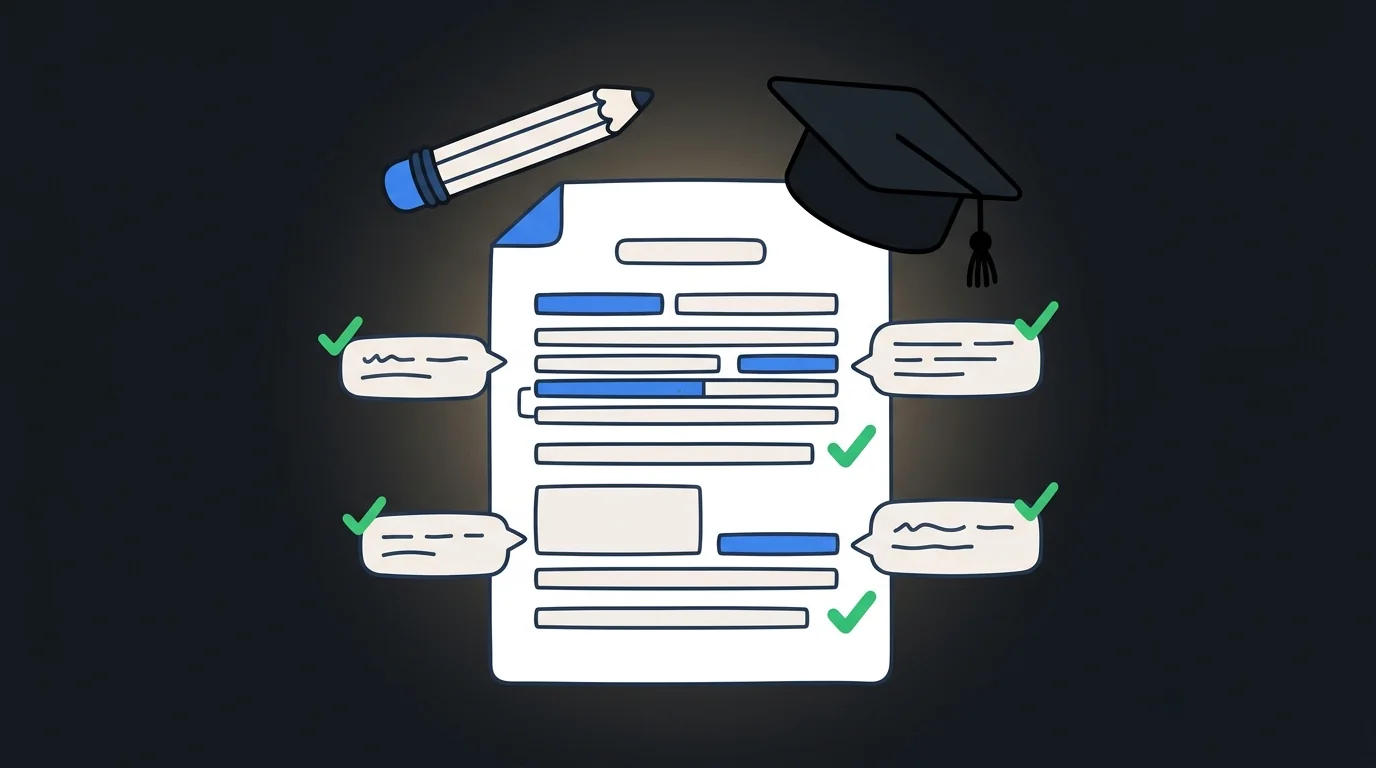
Submitting a college essay without getting feedback first is like sitting an exam without revising. You might do fine — or you might miss obvious mistakes that cost you marks. The problem is that meaningful feedback is hard to come by. Tutors are busy, peers don't always know what to look for, and reading your own writing critically is notoriously difficult.
That's where AI college essay raters have stepped in. In 2026, a new generation of tools can analyse your essay for grammar, structure, argument clarity, style, and even rubric alignment — giving you the kind of detailed commentary that used to require a paid writing tutor. But not all of them are equally useful. Some flag commas and call it a day. Others give genuinely actionable guidance that improves your writing before you submit.
This guide covers what the best college essay raters actually do, how they differ, and which tools are worth your time in 2026.
What Does a College Essay Rater Actually Do?
Before comparing tools, it's worth being clear about what good essay feedback looks like. A college essay rater should do more than run a spell check. The most useful tools evaluate several dimensions of your writing:
Grammar and mechanics — Catching errors in punctuation, sentence structure, subject-verb agreement, and word choice. This is the baseline. Most tools handle it reasonably well.
Argument and logic — Does your essay make a clear claim? Is evidence used appropriately? Are ideas developed or just stated? This is where many tools fall short.
Structure and flow — Is the introduction engaging? Do paragraphs transition logically? Does the conclusion land? Good structure feedback looks at the whole essay, not sentence by sentence.
Style and tone — Academic writing has conventions. A college essay rater should flag over-complicated language, passive voice overuse, or inconsistent tone.
Rubric or criteria alignment — This is the most advanced layer. If your essay is being marked against specific criteria — say, a university admissions rubric or a course-specific marking scheme — your feedback is only truly useful if it maps to those criteria.
Understanding these dimensions helps you evaluate which tool is actually worth using.
What Makes Feedback Actionable vs Superficial?
There's a meaningful difference between feedback that tells you something is wrong and feedback that tells you what to do about it. Superficial feedback sounds like: "Your argument could be clearer." Actionable feedback sounds like: "Your second paragraph introduces two separate claims without linking them — consider starting with a topic sentence that signals which point you're developing."
The best college essay raters in 2026 give specific, located feedback — they point to the exact sentence or paragraph, explain the issue, and suggest a revision. They also prioritise: not every comment carries equal weight, and a good tool distinguishes between critical issues (a missing thesis, logical gaps) and minor ones (a slightly clunky sentence).
Tools that generate vague praise alongside a list of minor corrections are not giving you feedback — they're giving you the appearance of feedback. When choosing a college essay rater, look for tools that are specific, honest, and prioritised.
The Top College Essay Raters in 2026
1. CuFlow
CuFlow is an AI-powered learning platform that takes a different approach to essay feedback. Rather than rating your essay against generic writing standards, CuFlow works from your own uploaded course materials — including the actual rubric, marking criteria, assignment briefs, or lecture notes provided by your institution.
This distinction matters enormously. If your professor has shared a marking rubric that weighs argument development at 40% and structure at 30%, a generic grammar checker is only addressing a small fraction of your actual grade. CuFlow lets you upload that rubric alongside your essay draft, and its RAG-powered AI analyses your writing against the specific criteria you'll actually be assessed on.
Beyond rubric alignment, CuFlow can generate revision suggestions rooted in the course content itself. If you've uploaded lecture slides or reading lists, it can identify where your argument might be missing a key concept from the course — the kind of feedback that signals genuine engagement with the material to a marker.
CuFlow is particularly strong for coursework essays, personal statements tied to specific programme requirements, and any situation where generic writing feedback misses the point. For students who want feedback grounded in their actual academic context, it's the most targeted tool available.
2. Grammarly
Grammarly remains one of the most widely used writing tools for students, and its college essay functionality has improved significantly. The premium tier now includes tone detection, clarity scoring, and audience-appropriate suggestions alongside its core grammar and style checking.
Grammarly's strengths are speed and accessibility. The browser extension and document editor integration mean you can get real-time feedback as you write. For grammar, punctuation, and basic clarity, it's reliable and easy to use.
Its limitations show at the deeper levels. Grammarly doesn't assess your argument, doesn't understand your assignment brief, and can't evaluate whether your essay meets specific marking criteria. Its suggestions are also sometimes generic — flagging passive voice in contexts where it's perfectly appropriate, or suggesting simpler words in technical writing where precision matters.
For a first-pass clean-up of your writing, Grammarly is a solid tool. For substantive feedback on whether your essay is actually doing what it needs to, you'll need to supplement it.
3. Turnitin Feedback Studio
Turnitin is best known for plagiarism detection, but its Feedback Studio feature offers marking and annotation tools that institutions use to return graded work. Some universities also make Turnitin's similarity reports available to students before submission, which can flag paraphrasing issues.
Feedback Studio is designed for instructors rather than students, so the self-service feedback experience is limited. Where it adds value is in understanding how markers will review your work — the annotation tools, rubric grids, and inline comments mirror what you'll receive as official feedback.
If your institution uses Turnitin, it's worth understanding how the system works and using draft submission features where available. But as a standalone essay rater for students, it's less useful than tools built specifically for the purpose.
4. PaperRater
PaperRater is a free AI essay grading tool that evaluates writing across grammar, vocabulary, style, and originality. It gives an overall score and highlights specific issues with explanations — making it more actionable than tools that just flag errors without context.
PaperRater works best for shorter essays and personal statements. It's fast, requires no account creation, and provides reasonably detailed feedback for a free tool. The trade-off is that it doesn't offer rubric alignment, doesn't learn from your uploaded materials, and its scoring can feel arbitrary without context for what the numbers mean.
It's a useful free option for a quick sense-check before submission, particularly if you're looking for grammar and style feedback without committing to a paid tool.
5. QuillBot
QuillBot started as a paraphrasing tool but has expanded into a broader writing assistant with grammar checking, summarisation, and essay feedback features. Its AI paraphraser can help you improve sentence-level clarity, and the writing reports give feedback on readability, word choice, and sentence variety.
For students who struggle with academic writing style — particularly those writing in a second language — QuillBot's sentence-level rewriting suggestions can be genuinely useful. However, it's more of a writing aid than a true essay rater. It doesn't assess argument quality or evaluate your work against marking criteria.
Use QuillBot as a style and clarity tool, not as a substitute for substantive essay feedback.
How to Use AI Essay Feedback Effectively
Getting the most from an AI college essay rater requires using it at the right stage of your writing process. Running your first draft through Grammarly is mostly wasted effort — you'll make structural changes that alter or delete the sentences it flagged. AI feedback is most useful at two specific points: after your first complete draft (for structural and argument feedback) and after your final revision (for grammar and polish).
It's also important to treat AI feedback as input, not instruction. The best AI raters surface issues and suggest directions — they don't replace your judgment about what you're trying to say. If a suggestion changes your meaning or removes your voice, ignore it.
For essays being marked against a rubric, always upload the actual criteria before running your feedback. A mismatch between what the marking scheme rewards and what a generic essay rater evaluates is one of the most common reasons students receive feedback that doesn't translate into better grades.
Choosing the Right College Essay Rater for Your Needs
The right tool depends on what kind of feedback you actually need. If you're writing a coursework essay for a specific module, CuFlow's ability to work from your uploaded rubric and course materials makes it the most targeted option. If you want quick grammar and style checking for a personal statement, Grammarly or PaperRater will handle that well. If you need to improve the academic register of your writing, QuillBot's style suggestions can help.
No single tool covers every dimension of essay quality. The most effective approach is to use a rubric-aware tool for substantive feedback on argument and criteria alignment, and a grammar tool for final polish — treating them as complementary rather than interchangeable.
FAQ
What is a college essay rater?
A college essay rater is a tool — usually AI-powered — that analyses your essay and provides feedback on grammar, structure, argument, style, or rubric alignment. The best tools give specific, located feedback rather than vague suggestions. Some tools focus purely on grammar; others assess the quality of your argument or evaluate your writing against specific marking criteria.
Can AI tools really replace human essay feedback?
AI tools can complement human feedback but not fully replace it. They're fast, consistent, and available at any time — making them useful for catching errors and flagging structural issues before you share your work with a tutor. However, they lack the contextual understanding of what a specific marker values, the ability to read between the lines of an argument, or the experience to recognise genuinely original thinking. Use AI feedback as a first pass, not a final verdict.
Is CuFlow free to use?
CuFlow offers a free tier that allows students to upload materials and generate feedback. Advanced features, including unlimited uploads and full rubric-based analysis, are available on paid plans. For students working on high-stakes assignments, the paid features offer significantly more targeted feedback than the free tier.
How accurate are AI essay graders?
AI essay graders are generally reliable for grammar and style feedback. Their accuracy on argument quality and rubric alignment depends heavily on how well the tool understands your specific assignment context. Tools like CuFlow that work from your uploaded materials tend to give more relevant feedback than generic tools that apply one-size-fits-all criteria.
Should I use an essay rater before or after I've finished writing?
Both. Use substantive feedback tools — those that assess argument and structure — after your first complete draft, so you can make meaningful revisions before polishing. Use grammar and style tools after your final revision to catch surface-level errors without disrupting content you've already refined.
Will my essay be stored or used to train AI models?
Policies vary by tool. Grammarly, for example, stores documents for service improvement unless you opt out. CuFlow's privacy policy restricts use of uploaded content to providing the service. Before uploading a complete essay to any tool, review the privacy policy — particularly if your institution has rules about submitting work through third-party platforms.