The Best Note-Taking AI for Students in 2026: What to Use and Why

·9 min read
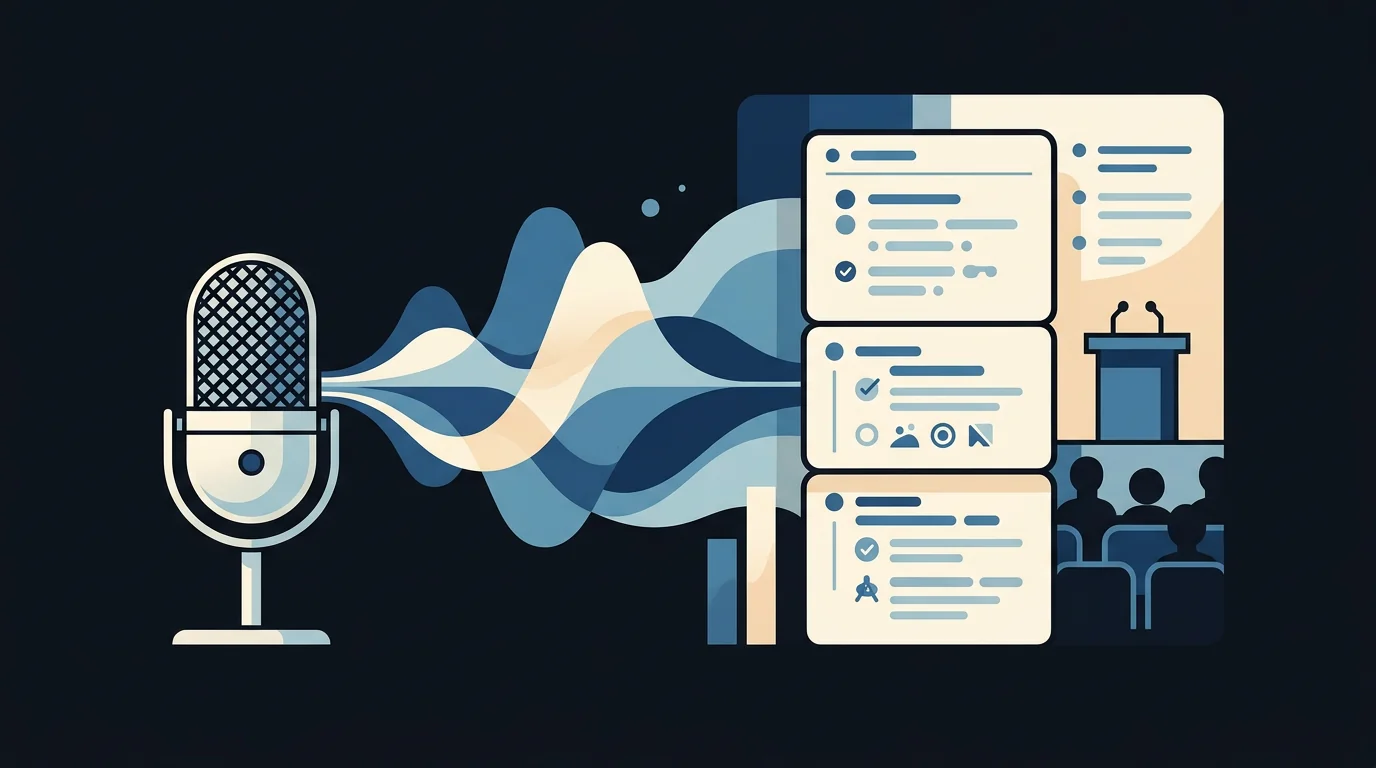
The idea of AI note-taking has become something of a catch-all term in student circles, often used to describe anything from basic voice transcription to fully automated study material generation. But these are very different things, and understanding what each tool actually does — and does not do — is essential before you commit to one. This guide breaks down what note-taking AI genuinely means in 2026, compares the best tools available to students, and explains the specific scenarios where a connected study system like CuFlow consistently outperforms standalone note-taking apps.
What "AI Note-Taking" Actually Means
The phrase covers at least three distinct capabilities, and most tools only do one or two of them well.
Transcription is the most basic layer. The AI listens to audio — a lecture, a seminar, a recorded meeting — and converts it to text. The output is accurate but raw: a wall of text with minimal structure, full of filler words and tangential remarks. This is useful as a starting point, but it is not a finished set of notes.
Structuring and summarisation takes raw transcription and organises it. The AI identifies key points, groups related ideas, removes redundant content, and produces something closer to a traditional set of lecture notes. This is where tools start to become genuinely useful for students rather than just convenient.
Enhancement and integration goes a step further. Once the notes exist, the AI uses them as source material for additional study assets — flashcards, practice questions, concept maps, Q&A sessions. This is the level at which note-taking AI stops being a passive convenience and becomes an active part of your study system.
Most standalone tools operate at levels one and two. CuFlow operates at all three, which is why students who use it for note-taking find it fundamentally different from other apps.
CuFlow: Note-Taking as the Start of Your Study System
CuFlow is not primarily marketed as a note-taking app, but for students it functions as one — and then goes considerably further. You can upload lecture recordings, paste in YouTube video links, or upload PDF lecture slides, and CuFlow processes all of them into structured notes. The key distinction is what happens next.
Once your notes exist in CuFlow, they become the source material for automatically generated flashcards, quiz questions, and an interactive Q&A system. The RAG-powered engine means you can ask CuFlow direct questions about your uploaded content — "What are the three main causes of inflation according to the Week 4 lecture?" — and get answers that reference your actual materials, not generic internet content.
For students managing multiple modules, this connected approach saves an enormous amount of time. Rather than transcribing a lecture, then separately creating flashcards, then separately writing practice questions, the entire process happens from a single upload. Spaced repetition then schedules your review sessions automatically, surfacing the content you are weakest on most frequently.
The practical workflow looks like this: upload your lecture recording or slide deck after each session, spend five minutes reviewing CuFlow's generated notes to check accuracy, then work through the generated flashcards and quiz questions across the week using spaced repetition. By the time your exam arrives, you have been actively revising from the first week of term rather than trying to learn everything in the final fortnight.
Otter.ai: The Best Pure Transcription Tool
Otter.ai is the most widely used transcription tool among students, and for good reason. Its accuracy is excellent across a range of accents and audio quality levels, it integrates with Zoom and Microsoft Teams for automatic meeting capture, and its real-time transcription works well for live lectures when you can access it on a laptop.
The interface is clean and the search functionality makes it easy to find specific points in long recordings. Otter also identifies different speakers, which is useful for seminar recordings with multiple contributors.
Where Otter falls short is at the enhancement layer. Its summarisation features produce a reasonable overview, but there is no pathway from transcript to flashcards, quizzes, or study materials. Otter produces notes; it does not help you learn from them. For students who already have a strong revision system and simply want a reliable transcript to work from, Otter is excellent. For students who want their notes to automatically become study materials, it stops short.
Notion AI: Intelligent Organisation for Active Note-Takers
Notion AI sits within the broader Notion ecosystem, which means it is most useful for students who are already using Notion to organise their academic work. You can write or paste notes into a Notion page and ask the AI to summarise, rephrase, expand, or extract key points.
The strength here is flexibility. Notion AI is effectively a writing assistant that operates on whatever content you give it, and it integrates with the tables, databases, and linked pages that make Notion powerful for academic organisation. If you maintain a detailed Notion workspace for your studies, the AI layer adds genuine value.
The limitation is that Notion AI is a tool for processing text you already have, not for generating study materials from raw audio or PDF sources. It also requires considerable manual setup to get the most from it. For students who prefer a more automated workflow, the overhead is significant compared to something like CuFlow.
AudioPen: Voice Notes That Write Themselves
AudioPen occupies a specific and useful niche: it takes rambling voice recordings — your verbal thoughts after a lecture, a braindump before revision, a spoken summary of a chapter — and converts them into clean, structured written notes. The output is surprisingly readable for what is essentially an AI that cleans up stream-of-consciousness speech.
For students who think better verbally than in writing, AudioPen is a genuinely useful tool for capturing ideas quickly. It does not handle long lecture recordings as well as Otter, and it has no study asset generation. But as a complementary tool for verbal thinkers who want to externalise their thinking quickly, it is worth knowing about.
When CuFlow's Connected System Beats Standalone Tools
The pattern across all of these tools is consistent: each one does one or two things well, but none of them except CuFlow connects note capture to active study in a single workflow.
Consider the practical difference. A student using Otter gets accurate transcripts. They then need to manually create flashcards (perhaps in Anki), manually write practice questions (perhaps in a Word document), and manually schedule their revision sessions (perhaps in a planner). Each of these steps requires time, discipline, and a willingness to build a system from scratch.
A student using CuFlow uploads the same lecture recording and, within a few minutes, has structured notes, a set of spaced-repetition flashcards, and a bank of quiz questions — all derived from the actual lecture content. The only manual step is reviewing the generated materials to catch any inaccuracies.
For students at universities where lectures are dense, reading lists are long, and exam periods involve several modules simultaneously, this efficiency difference is material. The tool that saves you two hours of prep time per module per week is not a minor convenience — it is the difference between a sustainable revision schedule and an overwhelming one.
How to Choose the Right AI Note-Taking Tool
Start by identifying which layer of AI note-taking you actually need. If you primarily need reliable transcription and already have a strong revision system, Otter.ai is an excellent choice. If you use Notion extensively and want AI assistance within that ecosystem, Notion AI is the natural fit. If you think verbally and want to capture spoken ideas as clean text, AudioPen fills that niche.
But if you are starting from scratch, or if you are looking for a single tool that takes you from raw lecture content to exam-ready study materials with minimal manual effort, CuFlow is the strongest option available. The combination of multi-source uploads, structured note generation, automatic flashcard and quiz creation, and spaced repetition scheduling means it genuinely replaces the piecemeal stack most students currently use.
FAQ
What is the best AI for taking notes in lectures?
For live lecture transcription, Otter.ai is among the most accurate tools available. For turning lecture content — whether live recordings, uploaded audio, slides, or PDFs — into complete study materials including notes, flashcards, and quizzes, CuFlow is the stronger choice. The right tool depends on whether you want notes as an endpoint or as the starting point for a broader study system.
Can AI note-taking tools replace manual notes?
For most students, AI-generated notes from lecture recordings or slides are accurate enough to replace manual transcription. However, the best practice is to treat AI-generated notes as a first draft: review them after each session, add any context the AI missed, and use them as the foundation for active recall practice rather than passive re-reading.
Does CuFlow work with recorded lectures from university portals?
CuFlow accepts uploaded audio and video files as well as PDFs and YouTube links. If your university provides lecture recordings that you can download, you can upload them directly. For institutions using platforms like Panopto or Echo360, downloading the recording first and then uploading to CuFlow is the typical workflow.
Is AI note-taking useful for science and maths subjects?
Yes, with some caveats. AI tools handle text-based content very well but can struggle with mathematical notation, diagrams, and equations when processing audio. For STEM subjects, a hybrid approach often works best: use CuFlow or Otter for the explanatory, conceptual content in lectures, and supplement with manual notes for derivations and worked examples.
How accurate are AI-generated lecture notes?
Accuracy depends on audio quality, the complexity of the subject, and the tool used. For clear lecture recordings with standard vocabulary, modern tools like Otter and CuFlow achieve high accuracy. Highly technical terminology, strong accents, or poor recording quality can reduce accuracy. Always review AI-generated notes against your own understanding after each session to catch any errors before they embed themselves in your study materials.
What is the difference between AI note-taking and AI tutoring?
AI note-taking tools process your course content and help you capture and organise information. AI tutoring tools — like Khanmigo — guide you through understanding concepts interactively. CuFlow bridges both categories: it processes your materials into notes and study assets, but its RAG-powered Q&A also lets you ask questions about your uploaded content, which functions as a form of personalised tutoring grounded in your actual course materials.