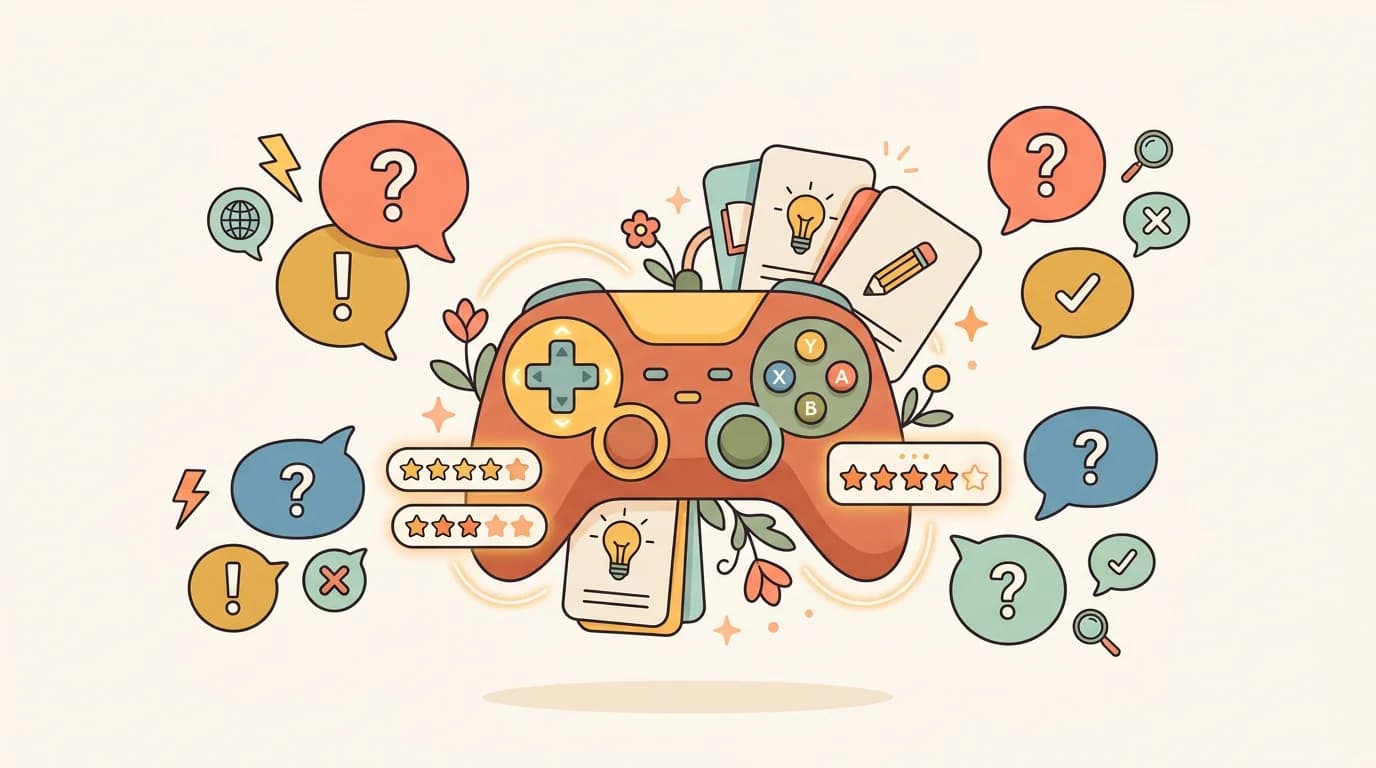
How to Turn Your Study Notes Into a Game (And Actually Remember More)

·11 min read
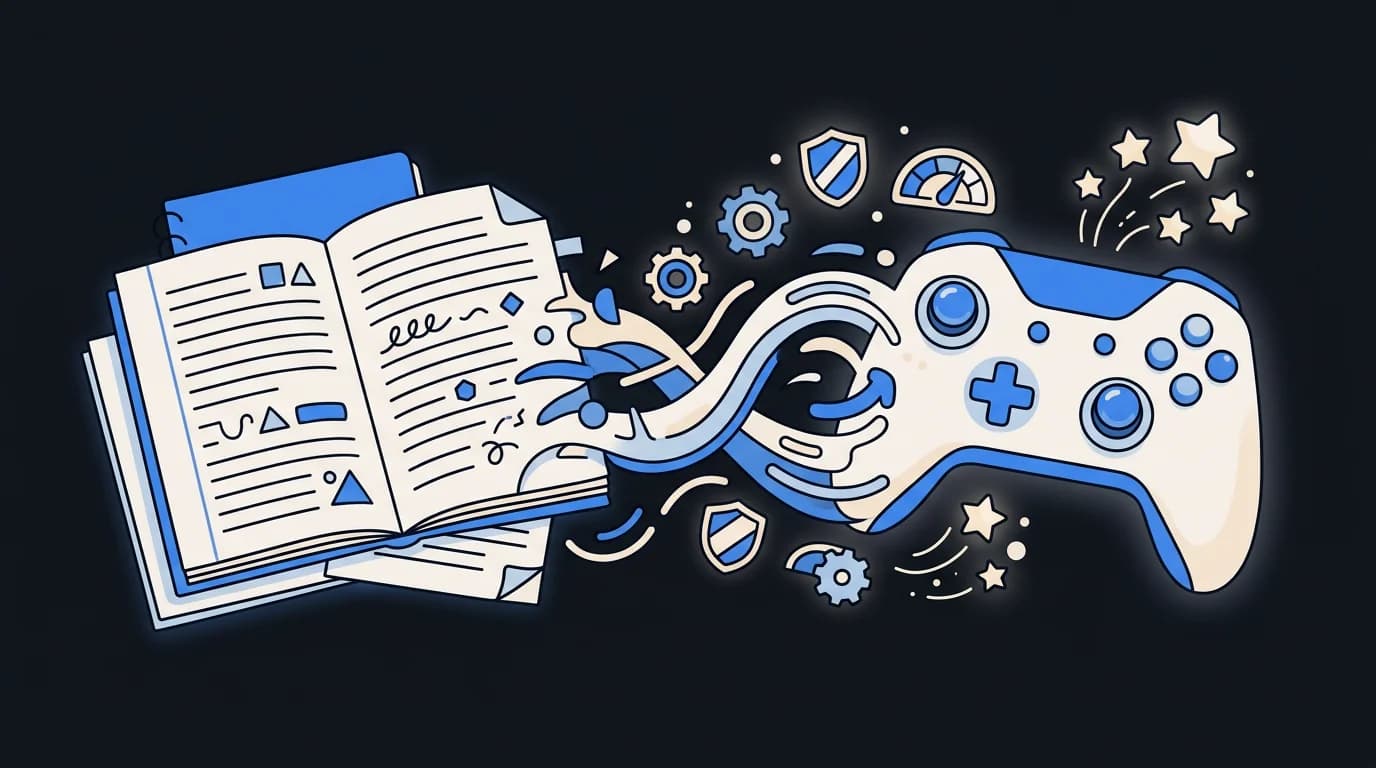
Re-reading your notes for the third time and retaining approximately nothing is one of the most frustrating experiences in studying. You're covering the material. You're putting in the time. You even highlight things. And yet, when you close the book, most of it is gone.
The problem isn't effort — it's method. Passive re-reading is one of the least effective study strategies known to cognitive science. It creates the feeling of familiarity, which students often mistake for actual learning. But familiarity and retrieval are different things. The ability to recognise something when you see it is very different from the ability to produce it from memory when you need it in an exam.
The good news is that a more effective approach — one that actually sticks — can also be more engaging. Turning your study notes into a game isn't a gimmick or a procrastination tactic. It's a practical application of the retrieval practice research, and in 2026, AI tools make it easier than it's ever been. Here's why it works, how to do it, and which tools are worth using.
Why Gamification Works: The Cognitive Science
The appeal of games isn't random. Games are designed around principles that happen to align closely with what cognitive science identifies as effective learning mechanisms. Understanding the overlap explains why turning your notes into a game isn't just fun — it's smart.
Retrieval practice. The most evidence-backed finding in learning science is that testing yourself on material produces significantly better long-term retention than re-studying it. This is called the testing effect or retrieval practice effect, and it's been replicated across hundreds of studies. Quiz-based games are, by definition, retrieval practice. Every time you answer a question correctly — or incorrectly — you're engaging in the exact cognitive process that produces durable memory.
Immediate feedback. Games give instant right/wrong feedback, which is educationally important. Knowing immediately whether your answer was correct allows you to correct misconceptions before they solidify. Deferred feedback — the kind you get from an essay marked a week later — is significantly less effective for learning.
Spaced repetition through replay. Well-designed study games surface questions you've got wrong more frequently than questions you've got right. This mirrors the logic of spaced repetition — the principle that reviewing material at increasing intervals optimises long-term retention. Games naturally implement a version of this through difficulty scaling and wrong-answer replay.
Dopamine and motivation. Points, progress bars, streaks, and leaderboards trigger dopamine release in ways that passive reading simply doesn't. This isn't a trivial effect. Motivation determines whether you sit down to study at all — and whether you keep going when it gets hard. The emotional engagement of a game makes sustained study sessions more achievable, particularly for topics you find dry.
Competition and social engagement. Playing against classmates — even asynchronously through leaderboards — increases engagement and effort. Research on competitive learning environments shows that appropriate competition (competitive with peers, not just with yourself) raises performance on recall tasks. This is the principle behind platforms like Kahoot that have been so effective in classroom settings.
Turning Your Notes Into a Game: The Manual Approach
Before jumping to AI tools, it's worth understanding the manual process — partly because it helps you use the AI tools more intelligently, and partly because the act of creating questions from your notes is itself excellent retrieval practice.
Step 1: Identify the key concepts. Go through your notes and highlight the terms, facts, processes, and ideas that are most likely to appear in your exam. These become the content of your game.
Step 2: Write questions in different formats. Multiple choice questions are the easiest to create and the most game-friendly. Flashcard-style questions (front/back) are also straightforward. For more complex material, short-answer questions that require explanation rather than just recall test deeper understanding.
Step 3: Add difficulty levels. Simple factual recall (what is the capital of France?) is different from application questions (using the concept of X, explain why Y happens). Building a range of difficulty into your question set creates a more effective game — easy questions build confidence and activate prior knowledge; harder questions push deeper understanding.
Step 4: Create a scoring system. Even a simple points system — 1 point for an answer you're confident on, 0 for hesitant, -1 for wrong — adds the motivational element of tracking performance. Over multiple sessions, seeing your score improve is genuinely motivating.
The limitation of this manual approach is time. Creating good questions from your notes takes effort — which is exactly why AI tools have become so popular for this purpose.
AI Tools That Turn Your Notes Into Study Games
1. CuFlow — Games Built Directly From Your Course Materials
CuFlow is the most direct solution for students who want to convert their own notes and course materials into an interactive study game without any manual question writing.
The process is straightforward: upload your lecture slides, PDFs, YouTube links, or recorded lectures, and CuFlow's AI automatically generates quizzes and flashcards drawn directly from the content of those materials. The questions aren't generic — they're built from what your course actually covers, using the terminology your lecturer uses and testing the concepts your module emphasises.
This is the key differentiator from tools like Gimkit or Blooket, which require you to create the question content manually (or find pre-made content in their libraries). CuFlow's RAG-powered AI does the content creation for you — reading your materials and generating questions that accurately represent what you need to know.
The quiz experience is engaging and gamified: questions are presented in a clear format, you get immediate feedback on your answers, and the spaced repetition system schedules harder questions to reappear more frequently. The flashcard mode has a game-like flow where you flip cards, self-rate your confidence, and progress through the deck with visual tracking.
Beyond quizzes, CuFlow's Q&A tool lets you challenge yourself by asking open questions about your course material — "explain the significance of X" or "what would happen if Y?" — and getting answers grounded in your actual course content. This self-quizzing mode is one of the most effective retrieval practice techniques available, and having an AI that can respond intelligently makes it far more useful than just reading back your own notes.
For students who want to turn their course materials into a complete game-like study system with minimal manual effort, CuFlow is the strongest option in 2026.
2. Gimkit
Gimkit is a classroom game platform inspired by Kahoot but with more sophisticated mechanics. Its distinguishing feature is an in-game economy: correct answers earn virtual currency that you spend on power-ups during the game, which adds a strategic layer that basic quiz games lack.
Gimkit works brilliantly in group settings — playing with classmates creates genuine competitive energy. It also has a solid solo mode for self-study. However, the question content needs to be created manually (or imported), which is the primary limitation compared to AI-native tools like CuFlow.
If you're willing to invest time creating question sets — either yourself or with classmates — Gimkit's game mechanics are more engaging than most study game platforms. It's an excellent tool for group revision sessions.
3. Blooket
Blooket is another game-based learning platform that has gained significant popularity for its varied game modes. Rather than a single quiz format, Blooket offers different "game types" — including Tower Defence, Gold Quest, and Café — each of which presents quiz questions in a different game context. This variety keeps the experience fresh across multiple sessions.
Like Gimkit, Blooket requires you to create or find question sets. The shared community library means you can often find pre-made sets for common school subjects and standardised tests. For less common or more specific course content, you'll need to create your own.
Blooket's strengths are engagement and variety. The different game modes appeal to students who find repetitive quiz formats boring after the first few sessions. As a supplementary tool for making revision more enjoyable, it's well worth using.
4. Quizlet
Quizlet's game modes — Match, Gravity, and the flashcard race — are built into its standard flashcard platform, making it a natural choice for students who are already using Quizlet for revision. The Match game (matching terms to definitions as quickly as possible) is particularly effective for vocabulary and concept-definition learning.
Quizlet's large shared content library means you can often find pre-made sets for your subject area, which removes the manual creation step. For courses with standardised curricula — A-Level subjects, standardised tests, professional qualifications — this is a significant time-saver.
The limitation is the same as other non-AI tools: the quality of pre-made content varies, and for unique or specific course content, you'll need to create your own sets.
Practical Tips for Making Study Games Work
Use them for retrieval, not introduction. Study games work best once you have some familiarity with the material. Don't use a quiz game as your first engagement with a topic — learn the basics first, then use games to test and reinforce.
Keep sessions short and focused. Twenty minutes of focused game-based revision is more effective than an hour of passive re-reading. The intensity and engagement of retrieval practice makes shorter sessions genuinely productive.
Review your wrong answers. When you get a question wrong in a game, don't move on immediately. Pause, understand why your answer was wrong, and note the correct answer. The mistake is the learning opportunity — use it.
Vary the game format. Flashcard games, multiple choice quizzes, and open-ended Q&A each test different aspects of your knowledge. Using a variety of formats ensures you're building flexible understanding, not just pattern recognition for one question type.
Play with classmates when possible. Social and competitive elements increase effort and engagement. Even a short group session before an exam — where everyone tests each other through a shared quiz game — can be more effective than the same time spent studying alone.
FAQ
Does gamifying studying actually improve exam performance?
Yes, when the games are based on retrieval practice rather than passive review. The research on the testing effect is robust: testing yourself on material improves long-term retention significantly more than re-reading it. Game formats that require you to recall answers from memory — rather than just recognise them — engage the same cognitive processes that make retrieval practice effective.
How long should a study game session be?
Twenty to thirty minutes is a useful target for a focused game session. Beyond this, concentration and the quality of retrieval tend to decline. Short, frequent sessions spaced over time are more effective than long, infrequent ones — which is the same principle as spaced repetition. Building game-based revision into a daily routine is more effective than saving it all for the night before an exam.
Can I use CuFlow if my notes are handwritten?
CuFlow works best with digital materials — PDFs, slide decks, YouTube links, and audio recordings. For handwritten notes, photographing them and converting to a PDF, or transcribing key points into a text document, will allow them to be uploaded. Alternatively, typing up your handwritten notes before uploading is itself good retrieval practice.
Are study games suitable for complex subjects like law or philosophy?
Yes, though the question format needs to be appropriate to the subject. For subjects requiring nuanced argumentation rather than factual recall, open-ended Q&A and essay-style self-testing are more appropriate than multiple choice games. CuFlow's Q&A tool, which allows you to ask and answer questions about your materials in free-form text, is particularly well-suited to subjects that require extended reasoning rather than just recall of facts.
What's the difference between gamification and just playing games?
Gamification means applying game-like mechanics — points, feedback, progress tracking, competition — to a non-game activity to increase engagement and motivation. It's distinct from simply playing games because the content is always your actual course material. The game format is a vehicle for retrieval practice, not a distraction from it. The difference shows in outcomes: students who use gamified study tools tend to spend more time in active recall and retain more than students who rely on passive review.
Can I use CuFlow alongside other study games like Blooket or Quizlet?
Absolutely. CuFlow's main advantage over Blooket or Quizlet is that it generates questions directly from your uploaded course materials without manual input. You could use CuFlow to generate questions, then export those questions to Blooket or Quizlet if you prefer those platforms' game interfaces. Many students use CuFlow as their primary study system and supplement with Blooket for group revision sessions.