How to Study for a History Test: A Better Method Than Re-Reading Notes

·3 min read
If you are trying to figure out how to study for a history test, the usual instinct is to go back through the textbook, re-read class notes, and highlight the biggest events. That feels productive, but it is usually not the most effective way to prepare.
History tests rarely reward simple familiarity. They usually test whether you can remember chronology, explain cause and effect, compare periods, and use evidence accurately. That requires more than passive review.
What Makes History Difficult to Study
History is challenging because it combines several kinds of memory at once:
- dates and timelines
- key figures
- causes and consequences
- comparisons between events or eras
- evidence for written answers
Students often collapse all of that into one long set of notes. The result is too broad to review efficiently and too passive to stick well.
A Better Way to Study for a History Test
1. Break the Material Into Themes
Do not start with a giant pile of pages. Break the course content into units such as:
- political causes
- economic factors
- major turning points
- important individuals
- consequences and long-term effects
This makes recall much easier than trying to memorize a chapter in order.
2. Build Timelines and Comparison Tables
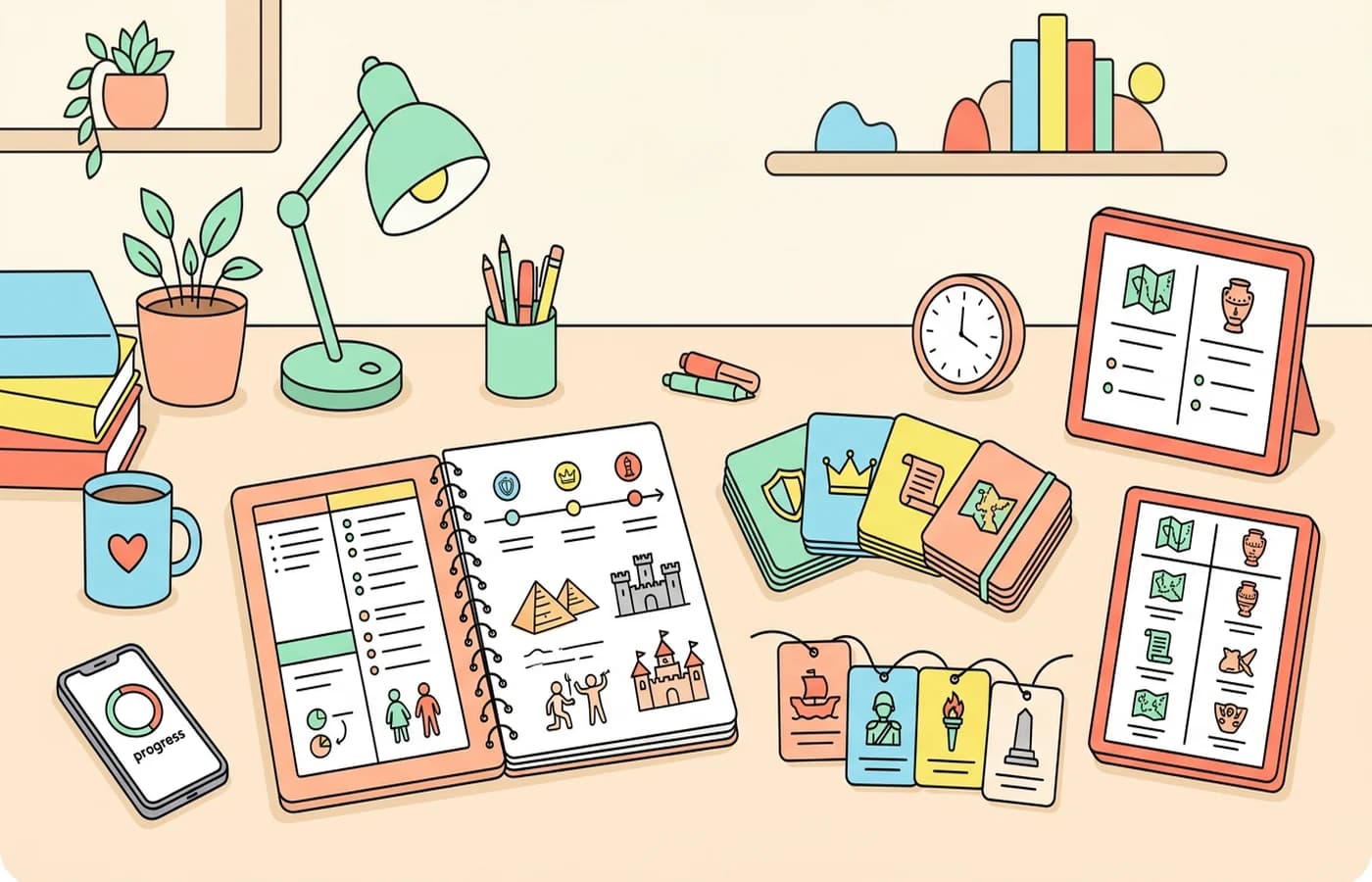
History becomes easier when events are positioned relative to each other. Timelines help with sequence; comparison tables help with distinction.
3. Use Questions, Not Just Notes
Turn your notes into prompts:
- What caused this event?
- Why did this policy fail?
- How was period A different from period B?
- Which evidence supports this interpretation?
That is where tools like CuFlow can help. Instead of leaving your notes as static text, you can turn them into quizzes and structured review materials. This works particularly well alongside approaches like PDF to quiz, guided notes generation, and study techniques for exams.
4. Practice Retrieval Repeatedly
History revision improves when you try to recall information without looking. Flashcards, quick-write prompts, and short self-tests are much more effective than reading the same notes again.
5. Prepare for the Test Format
A multiple-choice history quiz and a document-based written response require different preparation. Your study plan should match the actual exam.
Where AI Can Help
AI can be useful for:
- turning notes into flashcards
- generating self-test questions
- organizing material into themes
- summarizing long reading packets before review
But it should support your study process, not replace thinking. History still requires interpretation and evidence use, which means you need to actively engage with the material.
Common Mistakes Students Make
- memorizing isolated dates without context
- reading passively instead of self-testing
- studying in one long session instead of over several days
- skipping cause-and-effect relationships
- preparing for the wrong test format
These mistakes make history feel harder than it needs to be.
FAQ
What is the best way to study for a history test?
The best method combines thematic organization, timelines, retrieval practice, and exam-format practice. Passive re-reading is usually much less effective than quizzes, flashcards, and self-testing.
Are flashcards good for history?
Yes, especially for dates, key figures, terms, and cause-and-effect prompts. They work best when combined with broader written practice and thematic review.
Can AI help me study history better?
Yes. AI can help turn notes and readings into structured review tools, but it works best as a support layer for active study rather than a replacement for it.