AI Lecture Summarizer: What It Does Well, What It Misses, and What Students Should Use

·4 min read
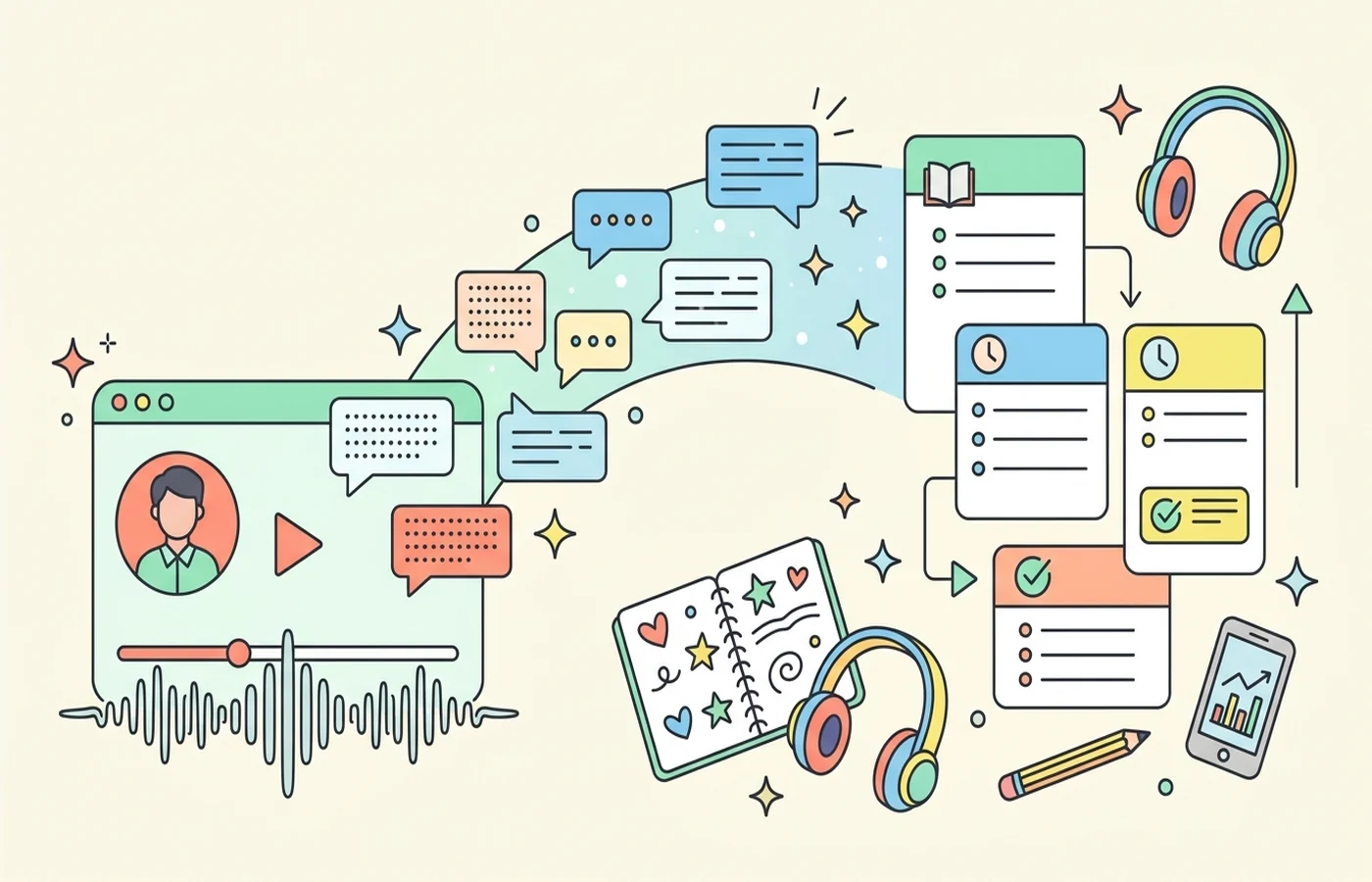
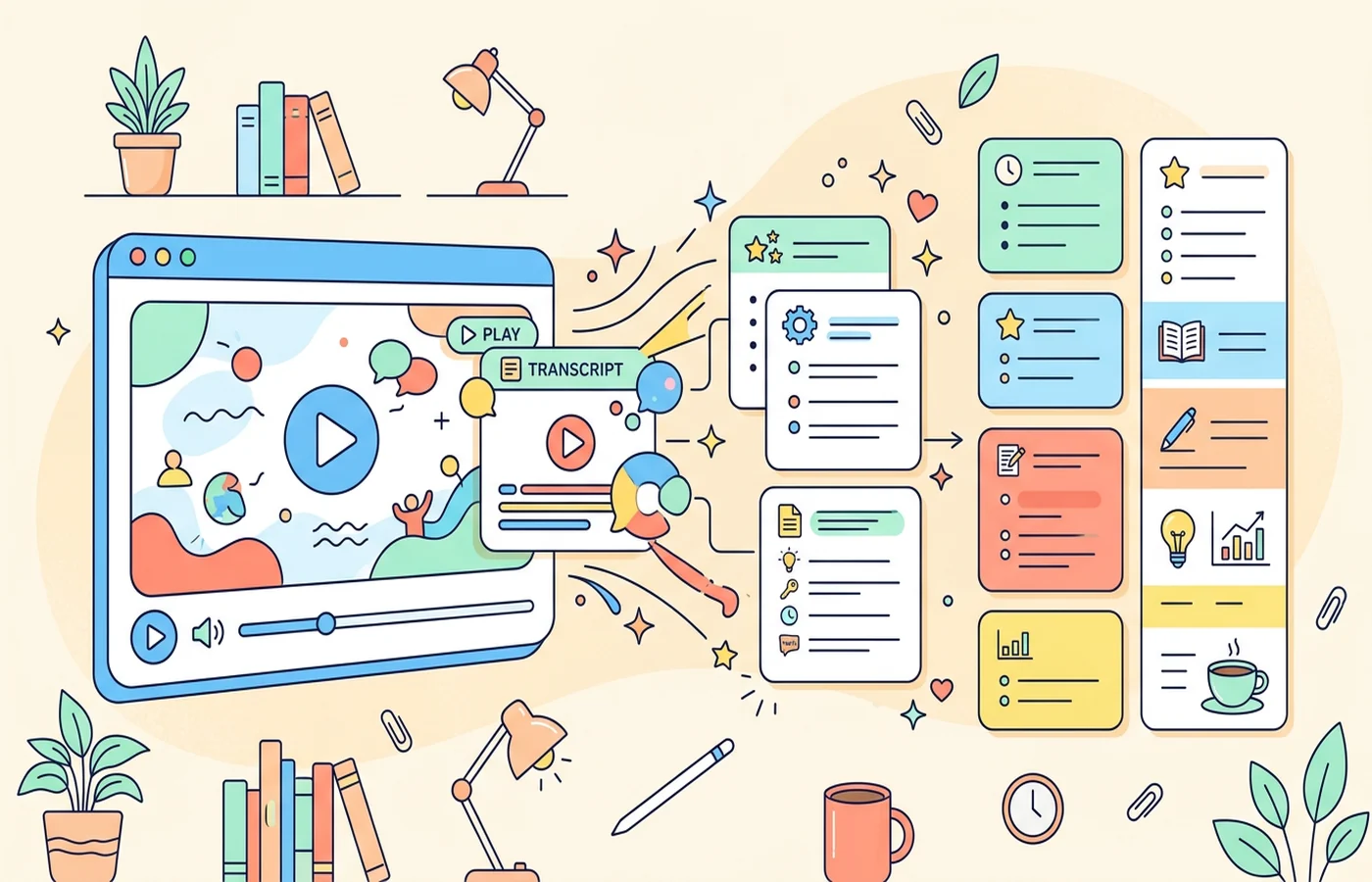
An AI lecture summarizer is supposed to solve a familiar problem: you have a 50-minute lecture recording, a messy transcript, and very little time to turn it into something useful before your next class. In theory, AI can condense that lecture into key ideas, definitions, examples, and likely testable points.
In practice, the quality varies sharply. Some tools merely shorten a transcript. Others actually extract structure, identify the main arguments, and convert the lecture into notes you can review productively.
The difference matters. A shorter transcript is not automatically a better study resource.
What an AI Lecture Summarizer Should Actually Produce
The best output from an AI lecture summarizer looks less like a paragraph summary and more like organised study notes:
- the topic of the lecture
- the main sections or arguments
- important terminology
- examples or case studies the lecturer used
- likely exam-relevant takeaways
If a tool gives you one tidy paragraph and calls it a day, it may save reading time, but it does not really replace note-taking.
Where AI Lecture Summarizers Help Most
They are strongest when:
- you missed part of a lecture
- you need a fast first-pass review before rewriting notes
- the lecturer speaks quickly and the transcript is hard to parse
- you are studying from recorded lessons, webinars, or uploaded class videos
They are weaker when the lecture relies heavily on whiteboard work, diagrams, pauses for discussion, or references to slides that are not included in the source.
The Best Options in 2026
1. CuFlow
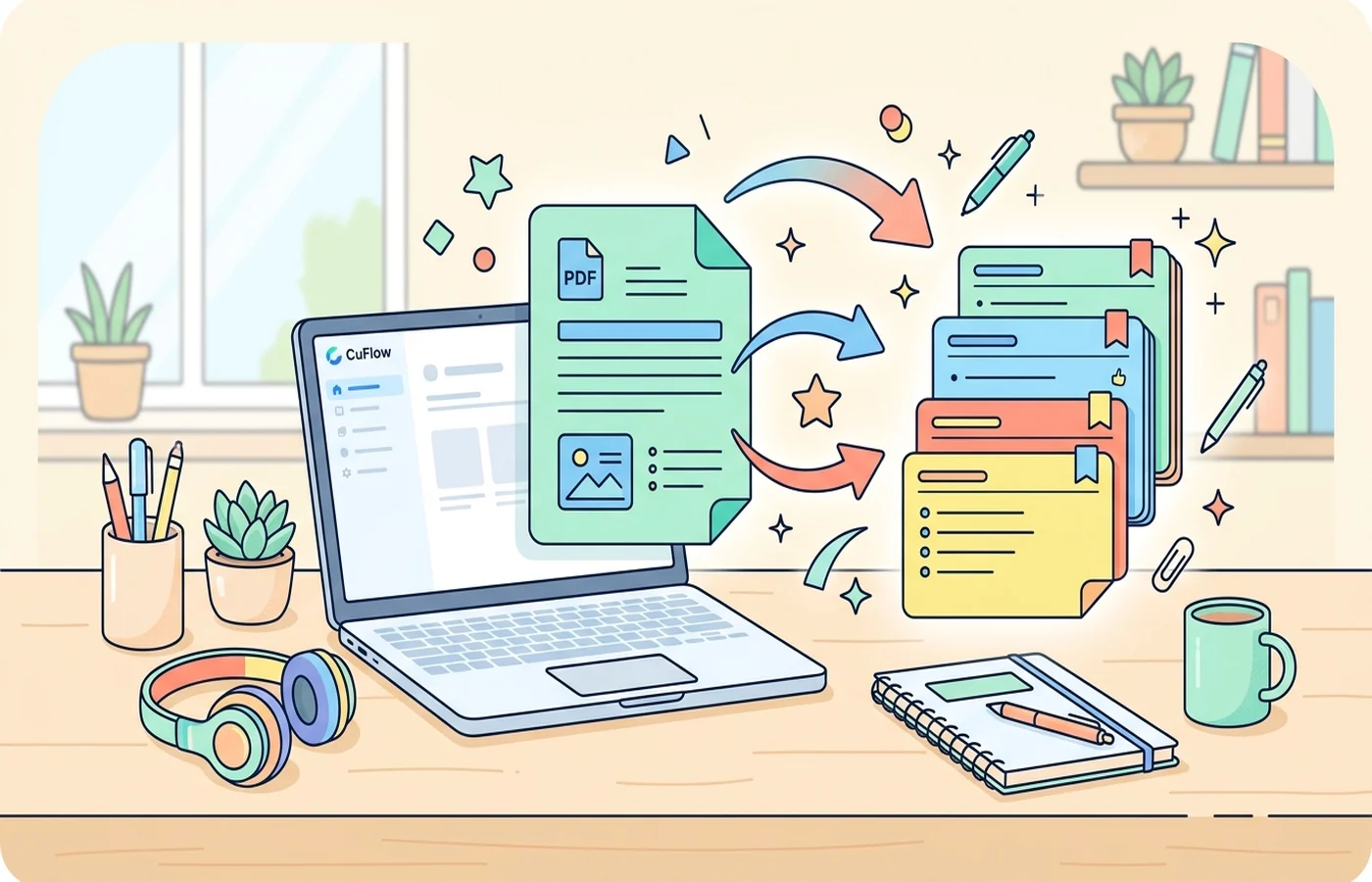
CuFlow is the best fit for students when the lecture summary is only one step in the larger study process. Instead of stopping at a transcript summary, CuFlow can turn lecture content into structured notes, quizzes, and flashcards that support later review.
This matters because the real value of an AI lecture summarizer is not summarisation alone. It is what you can do next. A useful summary should make it easier to build a study guide, test yourself, and revisit difficult material later.
If you are already exploring best AI lecture recorder apps, AI to summarize YouTube videos, or how to extract key takeaways, CuFlow fits best when you want lecture content to feed directly into active study.
2. Otter
Otter is strong for live transcription and meeting-style summaries. It is useful for capturing lectures in real time and generating a quick outline afterwards. It is less specifically built for student revision than CuFlow, but it is convenient if your main priority is recording plus transcript access.
3. NotebookLM
NotebookLM works well when you already have a transcript, lecture slides, or multiple class documents and want to ask questions about them. It is more analytical than recorder-like. This makes it strong for follow-up study, though less direct for simple lecture capture.
Why Many AI Lecture Summaries Feel Underwhelming
The first issue is transcript quality. If the recording is messy, incomplete, or full of speaker overlap, the summary inherits those flaws.
The second issue is missing context. Lecturers often point to slides, diagrams, equations, or gestures that are obvious in class but invisible in a text transcript. AI cannot reliably reconstruct everything that was implied but never spoken.
The third issue is passivity. Students sometimes confuse "I have a summary" with "I understand the lecture." A summary improves access. It does not replace recall practice.
A Better Student Workflow
- Capture the lecture or upload the recording.
- Generate a structured summary.
- Compare it against the transcript or slides for anything missing.
- Turn the summary into flashcards or questions.
- Review weak areas over several sessions rather than once.
That workflow is much stronger than collecting summaries you never revisit. It is also why tools that connect summaries to quizzes or flashcards tend to outperform transcript-only products.
When You Should Not Rely on an AI Lecture Summarizer Alone
Do not rely on it alone for:
- formula-heavy classes where the worked steps matter
- seminars built around discussion rather than lecture
- classes where your lecturer tests specific phrasing from the slides
- assignments requiring nuance from the full source material
In those cases, the summary should be a map back into the lecture, not a replacement for the lecture.
FAQ
What is the best AI lecture summarizer for students?
For students, CuFlow is one of the strongest choices because it turns lecture material into structured notes, quizzes, and flashcards rather than stopping at a short summary. Otter is useful for transcription-first workflows, while NotebookLM is strong for question-based review.
Can AI summarize recorded lectures accurately?
Usually yes, if the audio is clear and the lecture is mostly verbal. Accuracy drops when the class depends heavily on diagrams, equations, visual demos, or cross-talk.
Is an AI lecture summarizer better than taking notes yourself?
It is best used as a complement. AI can save time and catch details you missed, but your own note processing still helps comprehension and memory.