Slides to Flashcards: How to Turn Lecture Decks Into Better Revision Tools

·3 min read
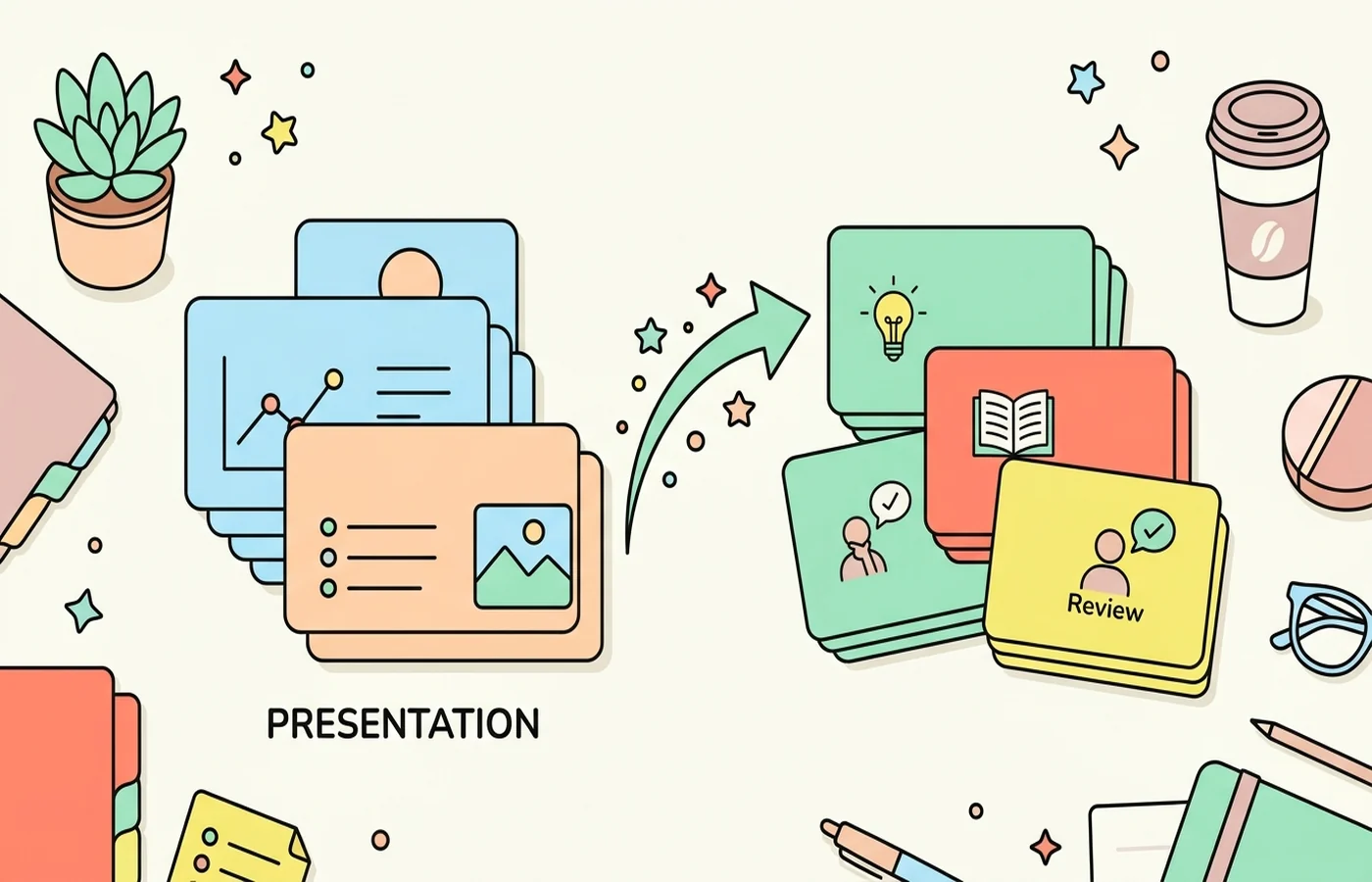
Slides to flashcards is one of the most useful AI study workflows because lecture decks often contain exactly the kind of material that flashcards work well for: definitions, frameworks, processes, examples, and comparison points.
The challenge is that slides are usually not written as study material. They are compressed for presentation, not revision. Turning them into flashcards requires interpretation, structure, and a sense of what is worth testing.
Why Slides Alone Are Not Enough
Most lecture slides are difficult to study from directly. They are often:
- too brief
- missing full explanations
- visually organized for class, not for review
- inconsistent in depth across topics
Flashcards solve a different problem. They force retrieval. Instead of looking at the slide and recognizing the answer, you try to produce it from memory.
That shift from recognition to recall is why converting slides into flashcards can improve retention so much.
What Makes a Good Slides to Flashcards Tool?
Document grounding. The flashcards should be built from your actual slide deck.
Good card design. Strong cards test one concept clearly instead of cramming multiple ideas together.
Editing flexibility. AI-generated cards are useful only if you can refine them easily.
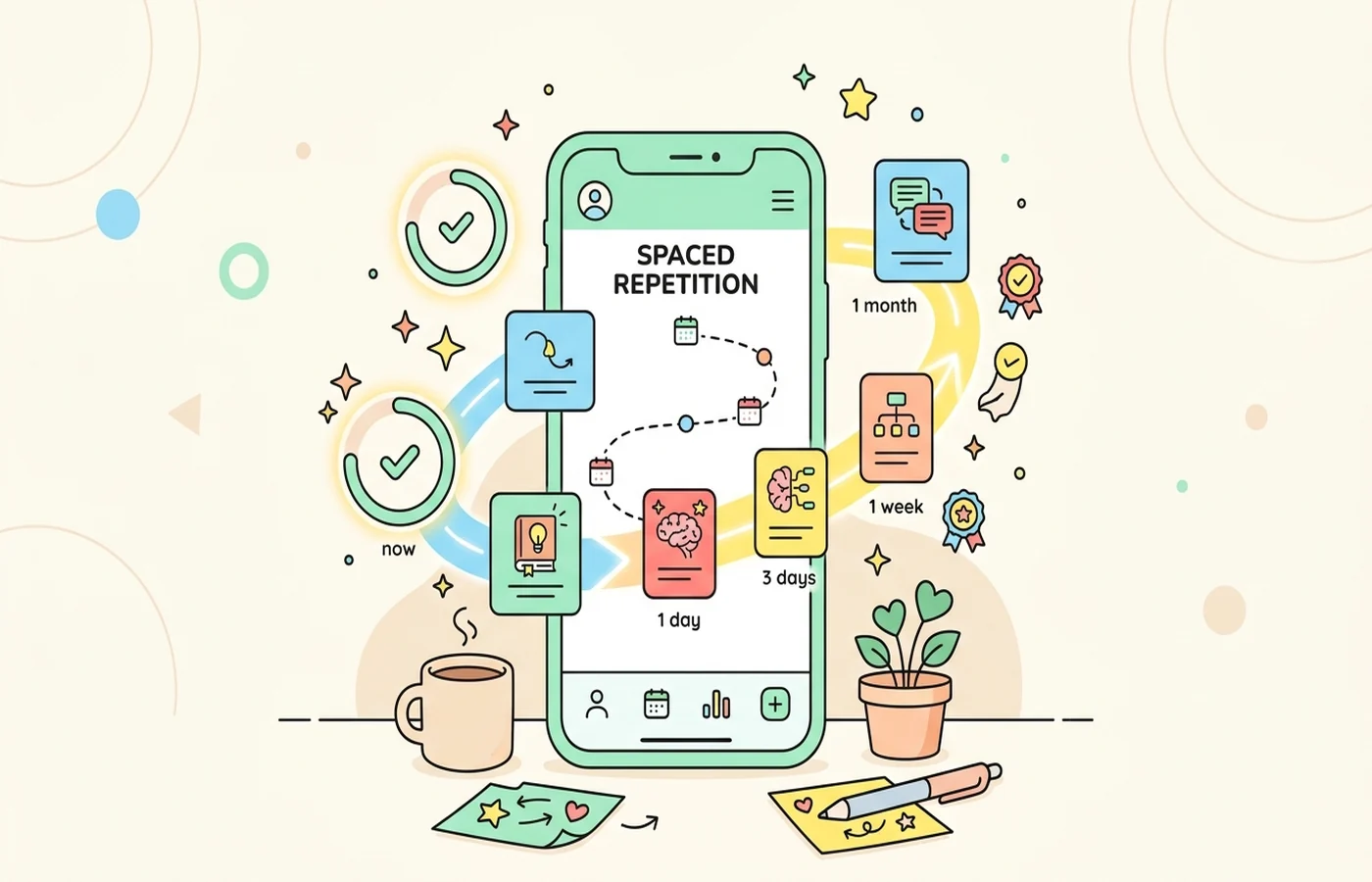
Review system support. Flashcards are strongest when paired with spaced repetition.
Best Ways to Turn Slides Into Flashcards
1. CuFlow
CuFlow is one of the best tools for slides to flashcards workflows because it can take source material and move it into structured revision outputs quickly. Instead of treating flashcards as a separate task, it connects them with notes and quizzes from the same material.
That makes it especially useful for students already working with PDF to notes, PDF to quiz, and spaced repetition apps.
2. Anki With Manual Import Workflow
Anki remains powerful if you want total control. The downside is that most of the slide interpretation work still falls on you unless you pair it with AI generation first.
3. Knowt
Knowt is a strong student-friendly option for quick flashcard creation from notes and slides, especially if you want a lighter workflow than Anki.
How to Make Better Flashcards From Slides
- Break the deck into topics.
- Pull out definitions and high-yield comparisons.
- Turn each point into one clear question-answer pair.
- Rewrite vague slide bullets into plain language.
- Review weak cards repeatedly rather than all cards equally.
This matters because poor flashcards are often too broad. A good flashcard asks for one concept, one distinction, or one example at a time.
When Slides to Flashcards Works Best
It works particularly well for:
- biology and medicine
- history terms and timelines
- psychology frameworks
- law or business concepts
- any course with lots of named ideas and definitions
It is less effective for solving-heavy courses where procedural practice matters more than concept recall.
FAQ
What is the best slides to flashcards tool for students?
CuFlow is one of the strongest options because it connects slide-based flashcard generation with notes, quizzes, and review workflows. Knowt is also a practical student-friendly option, while Anki is best for high-control users.
Can AI turn PowerPoint slides into flashcards?
Yes. If the slides contain extractable text and clear concepts, AI can usually generate useful first-draft flashcards. Students should still edit the cards before relying on them heavily.
Are flashcards good for every subject?
No. They are excellent for definitions, facts, and conceptual distinctions, but less effective as the main method for procedural problem solving or long-form writing practice.